
A cross-platform property app, from a single codebase
Cross-platform apps in React Native, one codebase serving both stores. The app below carries the same inventory as the client's website, so someone who first saw a landing page finds the same items, the same photography and the same enquiry routes on their phone — the pattern applies to any catalogue a business already publishes on the web. Every screen is from the shipped build, and each links to the decision behind it.
These screens also appear on the UI/UX Design page, where the subject is the interface decision. Here it is the app as a delivered product: one codebase, two platforms, and the same inventory as the website it sits alongside.
App screens
11 captures


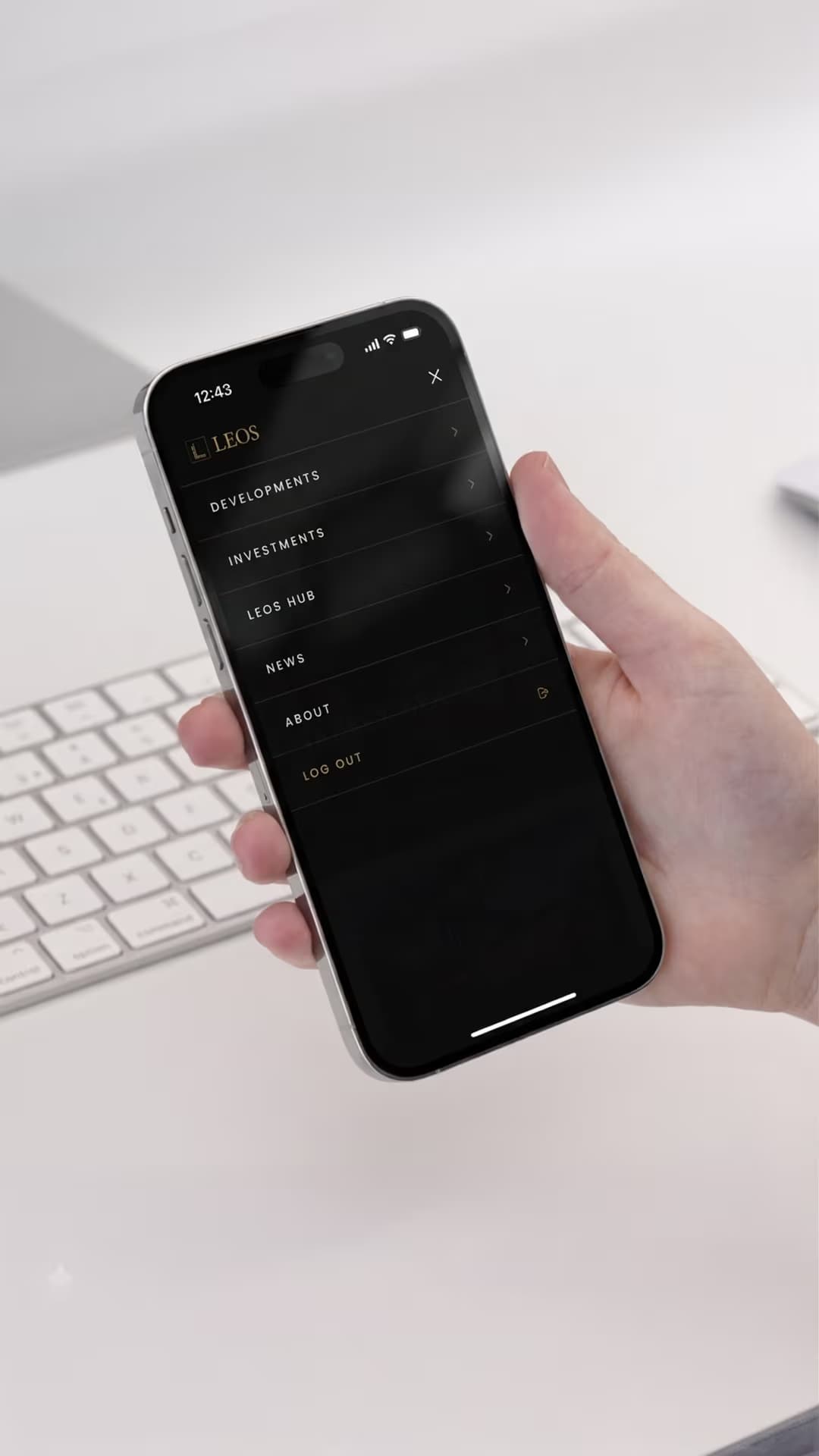
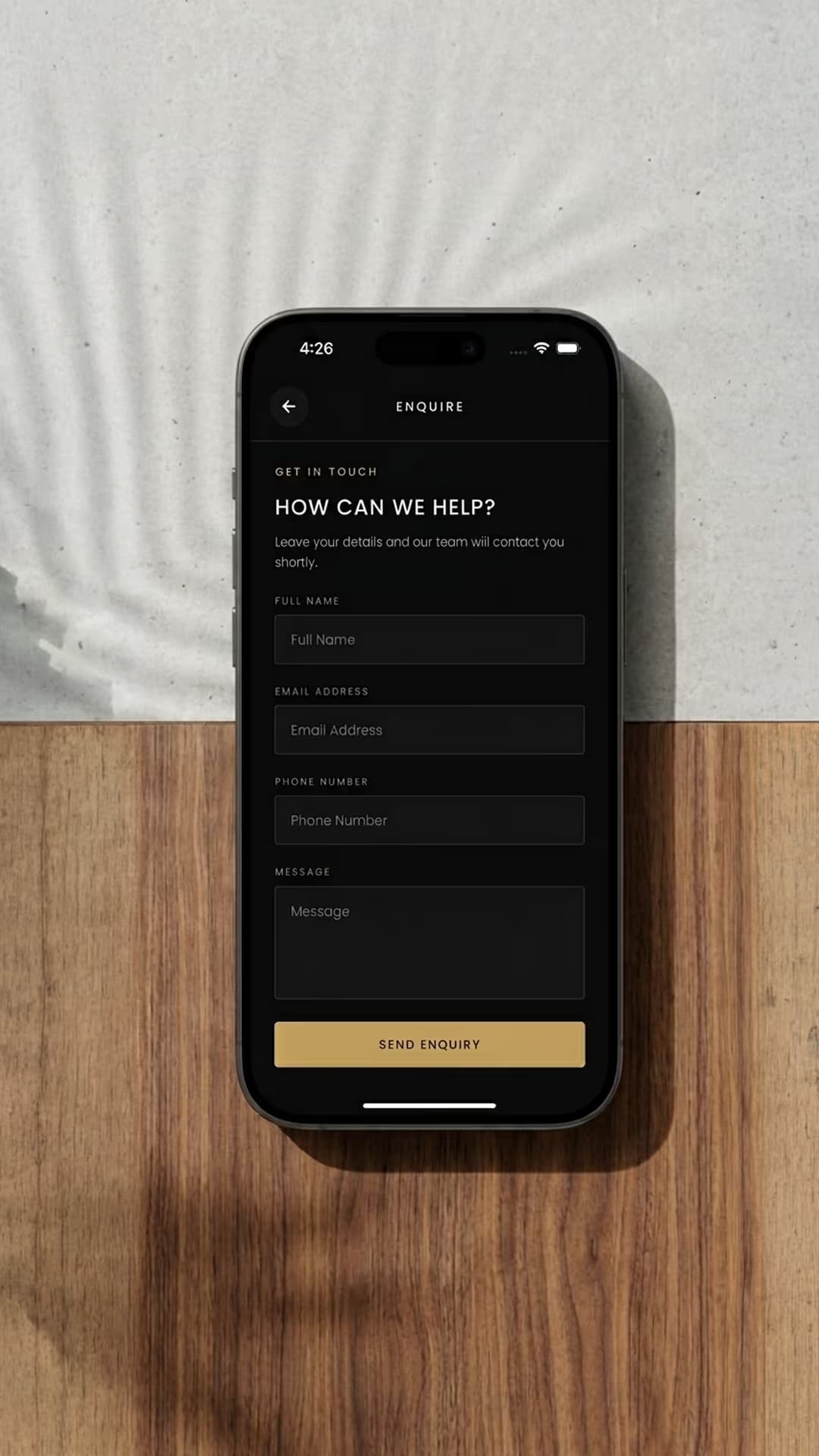






One codebase, two stores, and why that was the right call
These apps are React Native, which means iOS and Android were built once rather than twice. The saving is real and it is not the fifty per cent people expect: there is still platform-specific work, separate testing on both, two store submissions and two sets of compliance. What it removes is the budget pressure that normally causes Android to be treated as the version that gets done second and tested least.
In this region that matters more than it would elsewhere. Android is the majority platform across much of the UAE audience, and an app that was clearly built for iOS and ported afterwards is obvious to the people using it.
A mistake in an app is more expensive than one on a website
A broken page on a website is fixed and live in minutes. A broken app has to be rebuilt, submitted, reviewed by Apple or Google, approved, and then actually installed by users, some of whom will not update for months.
That single difference changes how the work is done. More testing before release, on real devices rather than only a simulator, including older phones and weak connections. A staged rollout rather than everyone at once. And a way to force an update when a version turns out to be unsafe, which has to be built before it is needed rather than after.
The parts of an app project nobody quotes for
Store submission is consistently underestimated. Apple and Google both review every submission against rules that change, and both can reject you for reasons unrelated to whether the app works: a missing privacy declaration, an account deletion route, a permission prompt that asks at the wrong moment, screenshots at the wrong sizes.
Then there is the back-end, which is where most of an app's real cost sits and which is invisible in any screenshot. Where the data lives, who may see what, what happens when an integration goes down at two in the morning. On this work the app and the back-end were built together, which is the arrangement that avoids the most common gap in an app project team.
Mobile Development questions
Do you build native or cross-platform?
Cross-platform in React Native, as on this project. For most business apps one codebase serving both stores is the right economics for a single developer. If your app genuinely needs platform-specific native work, I will say so rather than take the project.
Do you handle App Store and Play Store submission?
Submission is a step I can run with you, and it is worth planning for early because store review is the part of a launch date nobody controls. I have not claimed a published listing for the app on this page, because that is the client's to announce.