
A sales presentation application for the experience centre floor
- Built for
- Experience centre sales team
- Primary device
- Showroom touch screen
- Also used on
- Tablets and mobile
- Developments
- Hadley Heights, Weybridge Gardens, Cavendish Square
What the sales presentation application replaced
An experience centre meeting has a shape. A buyer arrives interested in a development, not a unit. Over the next hour that narrows: which tower, then which floor, then which apartment, then what it costs and whether it is still available. The job of the room is to carry someone through that narrowing without losing them.
The tooling did not follow that shape. Renders and walkthroughs lived in one place, unit availability lived in the CRM, floor plans lived in PDFs, and the location story lived in a printed brochure. A sales manager moving a buyer from interest to a specific apartment was switching between systems in front of them, and the one question that closes the conversation — is this one still available — was the one that could not be answered on the spot with confidence.
Anything the buyer asked for afterwards had to be found and sent separately, which put a gap of hours or days between the meeting and the follow-up.
Building around the narrowing, not the content
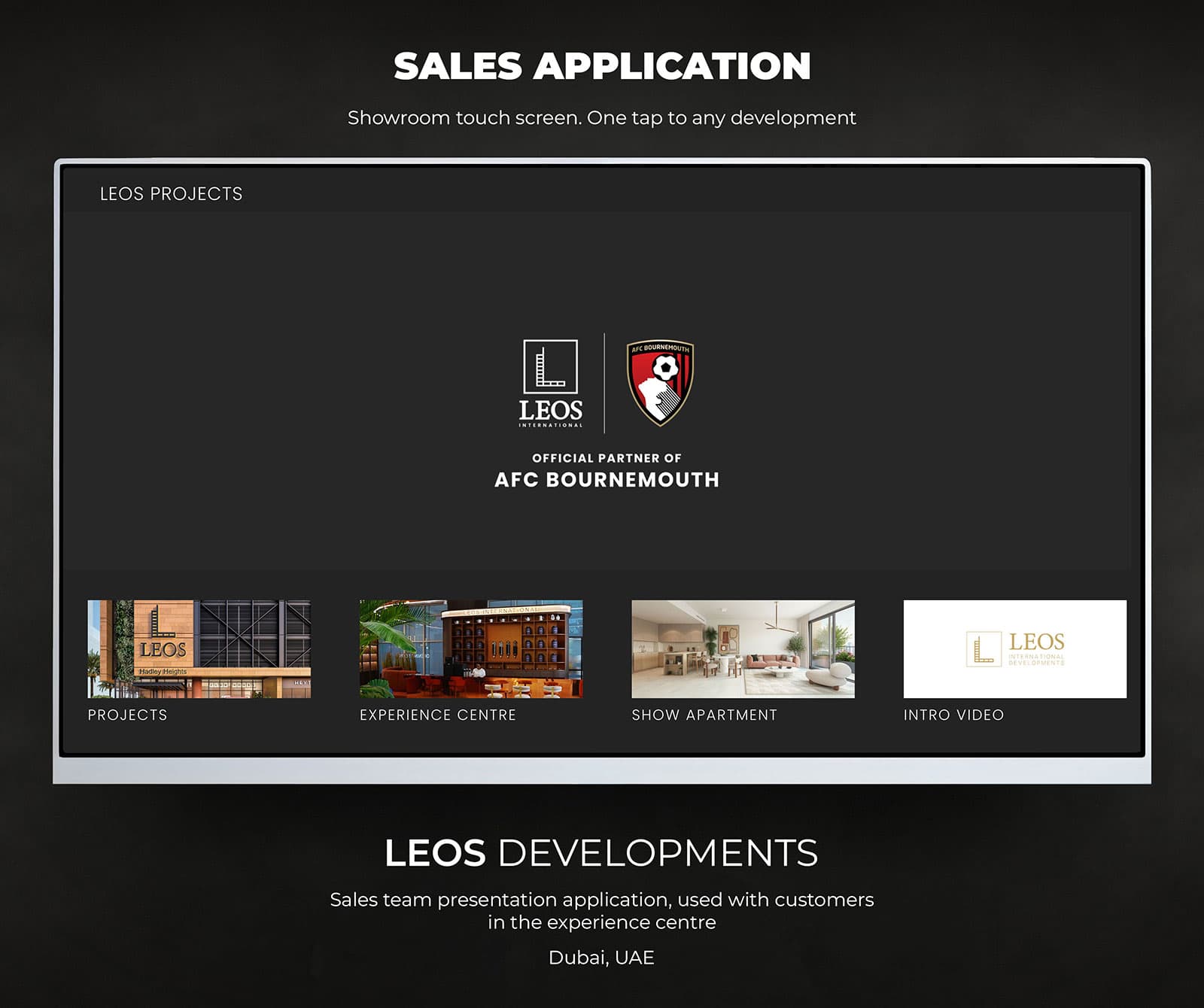
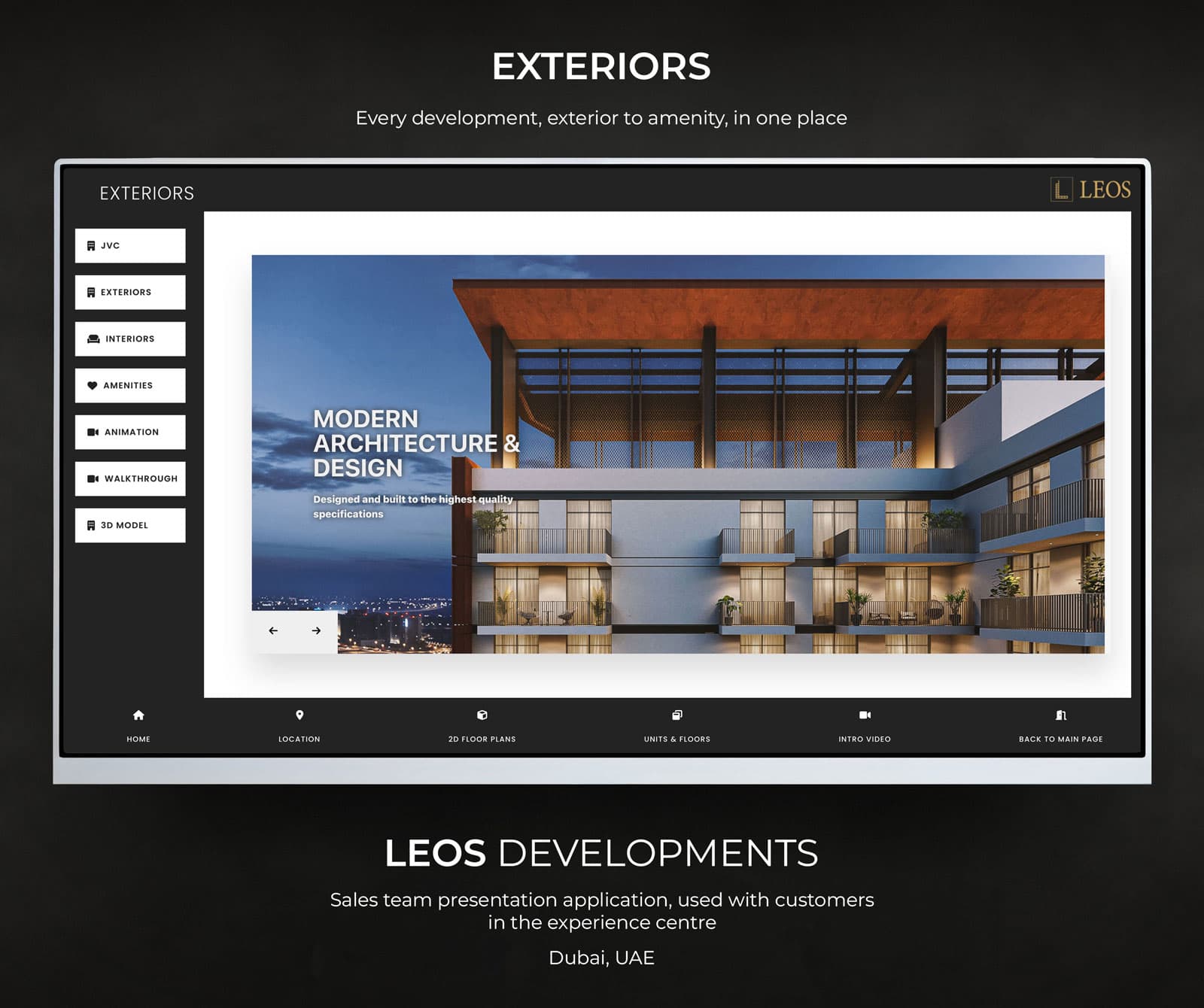
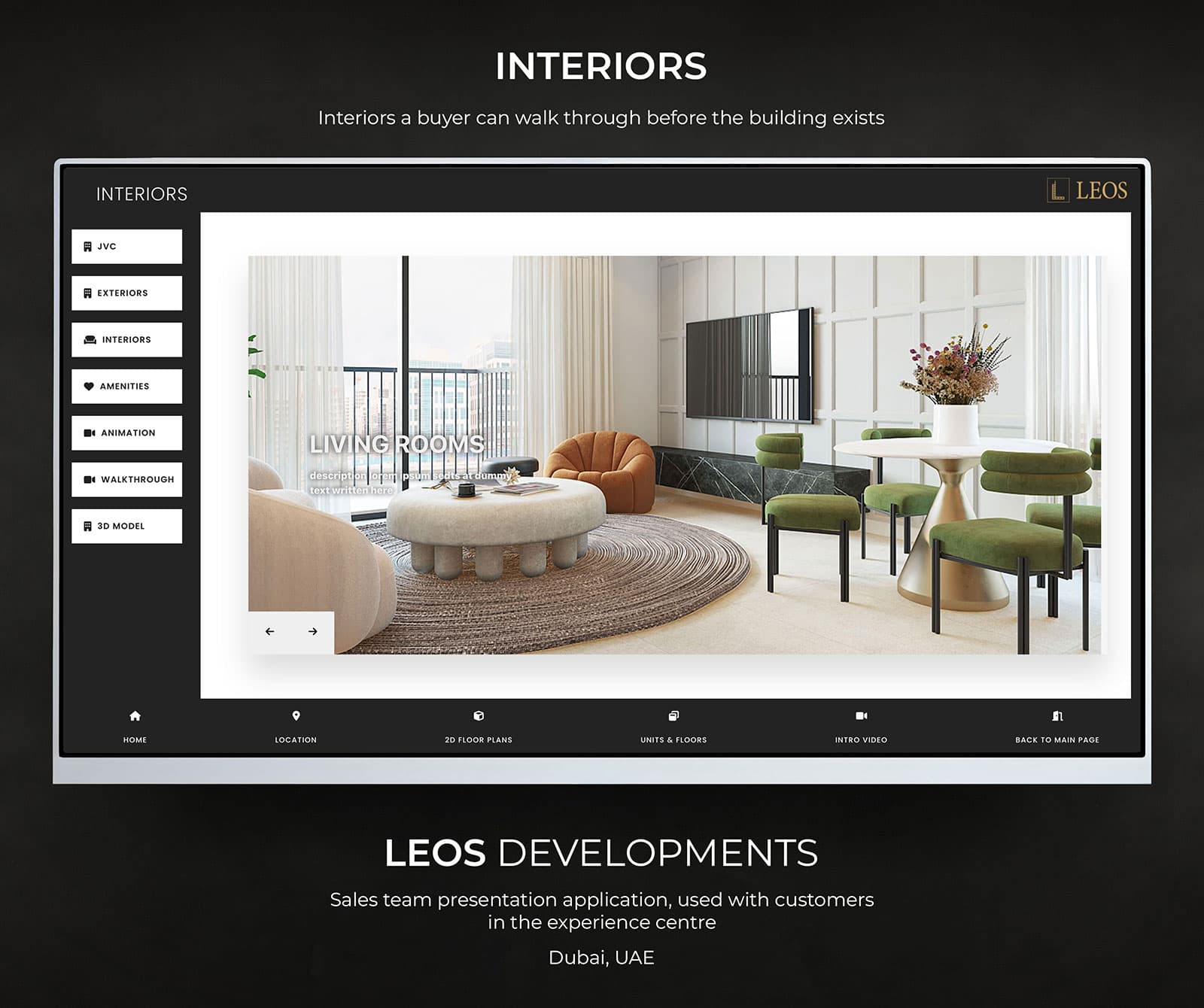
The sales presentation application is organised the way the meeting runs rather than the way the content is filed. The main menu opens on developments. A development opens on its exteriors, with interiors, amenities, animation, walkthrough and the 3D model one tap away in a rail that never moves. From there the drill down goes building, floor, unit.
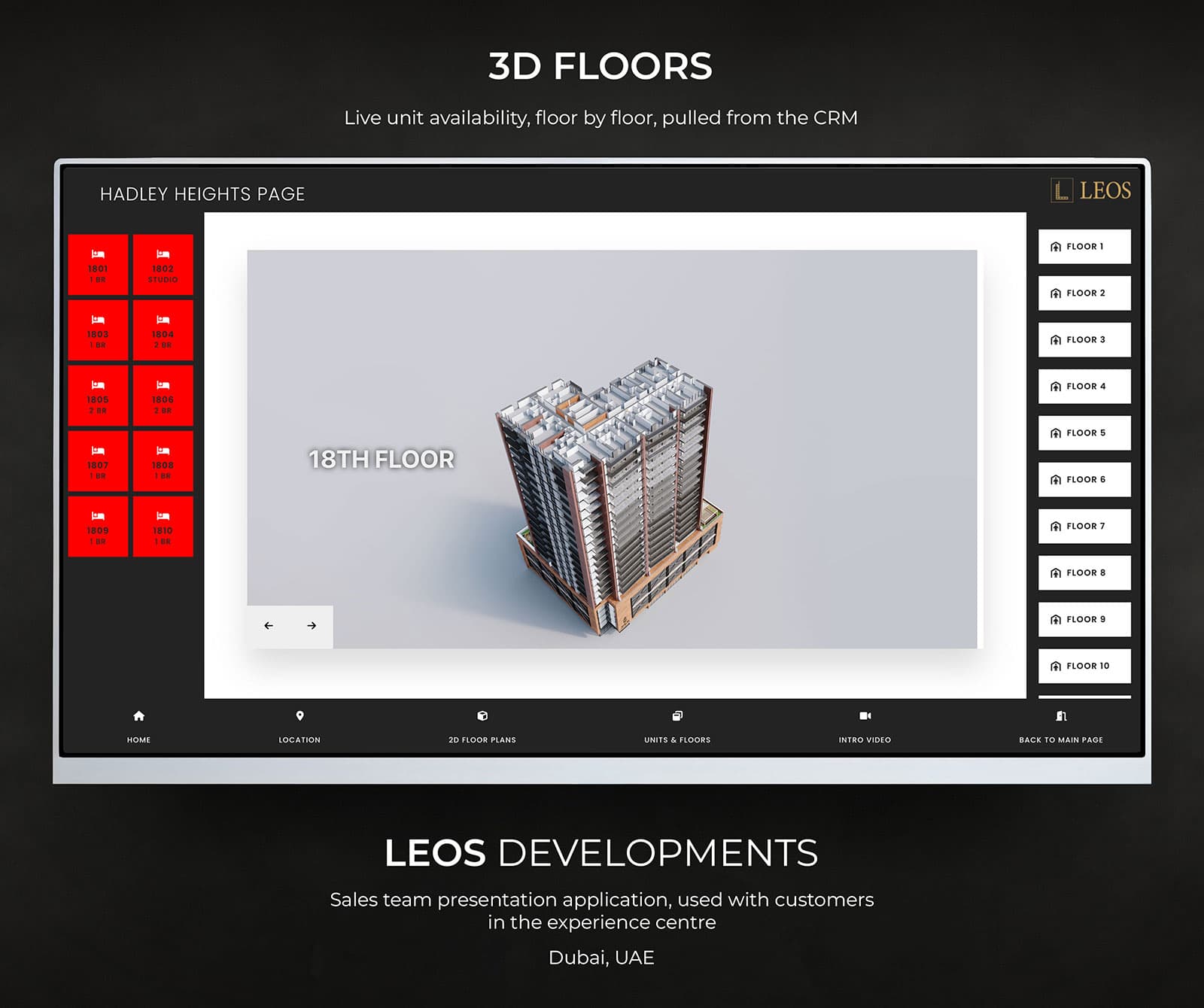
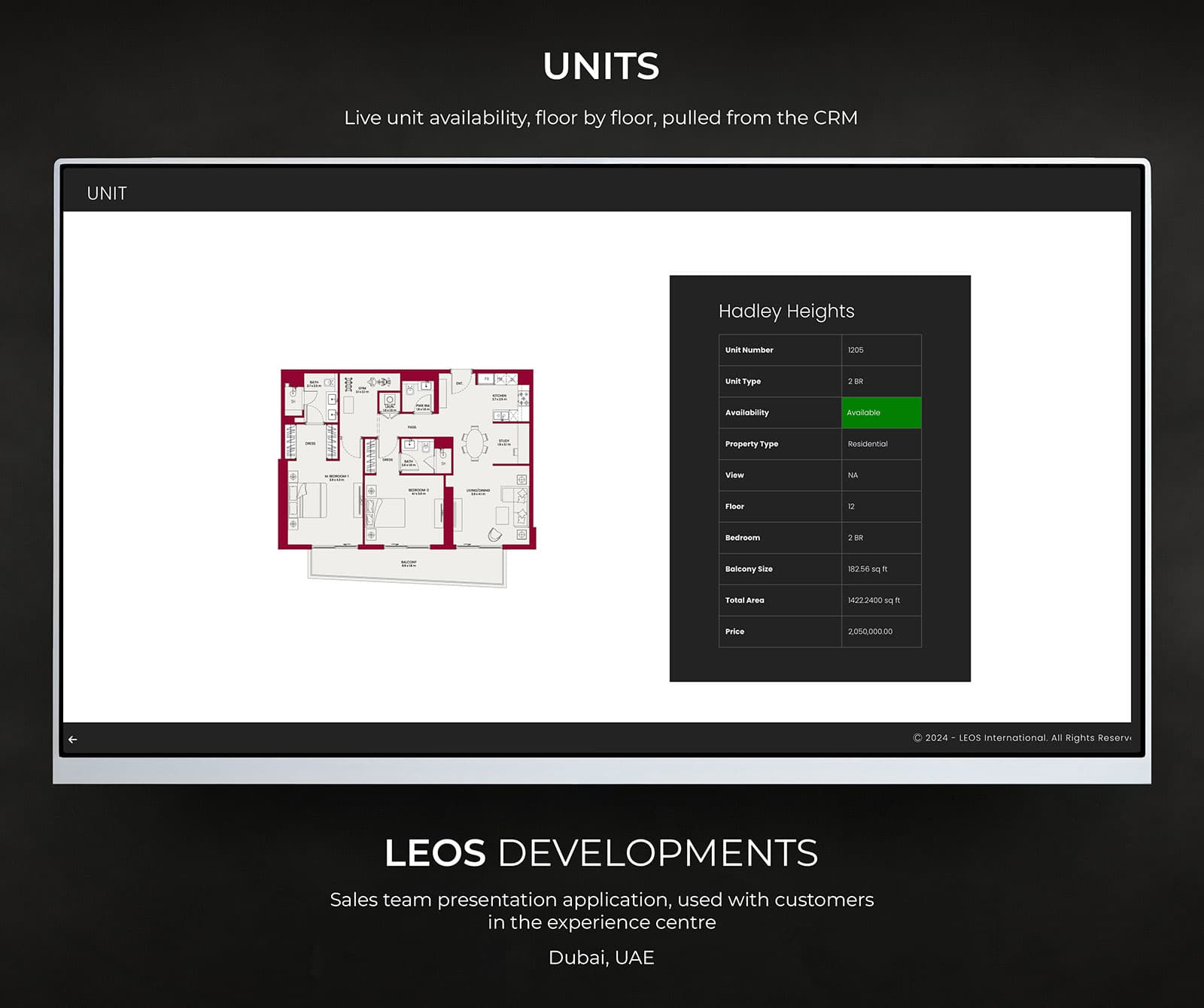
The 3D floor view is where the tool stops being a presentation. The model rotates, a floor selector runs down one side, and selecting a floor shows every unit on it with its current state. Tapping a unit opens the floor plan beside its specification: type, floor, balcony size, total area, availability. That availability reads from the CRM, the same system the team books against, so it is true at the moment it is shown rather than true as of the last export.
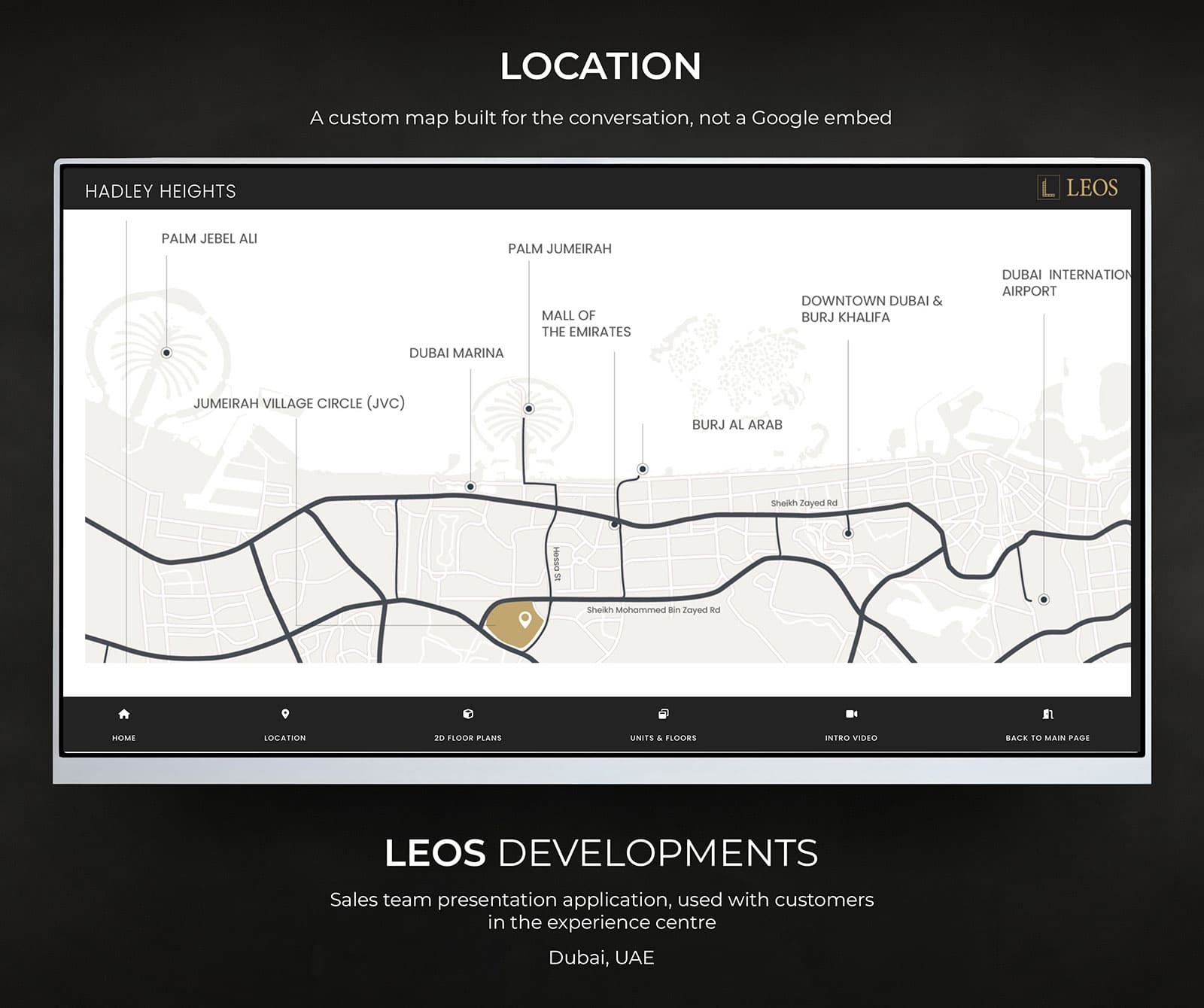
The location map was drawn rather than embedded. A generic map pin answers where the building is. A buyer in a meeting is asking something narrower: how far is this from the places I already use. The custom map marks the site against Dubai Marina, Palm Jumeirah, Mall of the Emirates, Downtown and the airport, which is the comparison a buyer is actually running.
Brochures and fact sheets are shareable from inside the application, so the follow-up leaves the room with the buyer instead of arriving two days later.
What changed, and why a marketer built it
It was built for one screen: the large touch display in the Dubai experience centre. The layout was made responsive regardless, on the assumption that nothing stays on the device it was designed for. The sales team began using it on tablets and phones outside the centre, and sending live project detail and availability to customers directly from it. A tool being used beyond its brief is the clearest signal it works that a project gets without a figure attached to it.
The reason this sits in a marketing portfolio rather than a development one is that the two sides share a data source. The availability that decides what a sales manager shows in a meeting is the same availability that should decide which units a campaign promotes. When those are owned separately they are reconciled by hand, late, and usually after a campaign has already sent traffic to an apartment that sold last week. Owning both meant the campaign work and the sales floor were reading from the same place.
No performance figures are claimed here. LEOS released none for publication, and a case study carrying an invented number is worth less than one carrying none.
About this application
Where does the unit availability come from?
The CRM. The availability state on a unit is read from the same system the sales team books against, rather than a spreadsheet exported at the start of the month. That is the difference between a presentation and a tool: a sales manager can open it in front of a buyer without checking first whether it is still true.
Was this built for the showroom screen or for mobile?
The showroom screen. It was designed for a large touch display in the Dubai experience centre, which is where the meetings happen. The layout was built responsive anyway, and the team started using it on tablets and phones outside the centre, which was not the original brief.
Why does a marketer build a sales tool?
Because the unit data and the campaigns are the same data. The availability that drives what a sales manager shows in a meeting is the availability that should drive which units a campaign promotes. Building both sides meant they could speak to each other instead of being reconciled by hand.